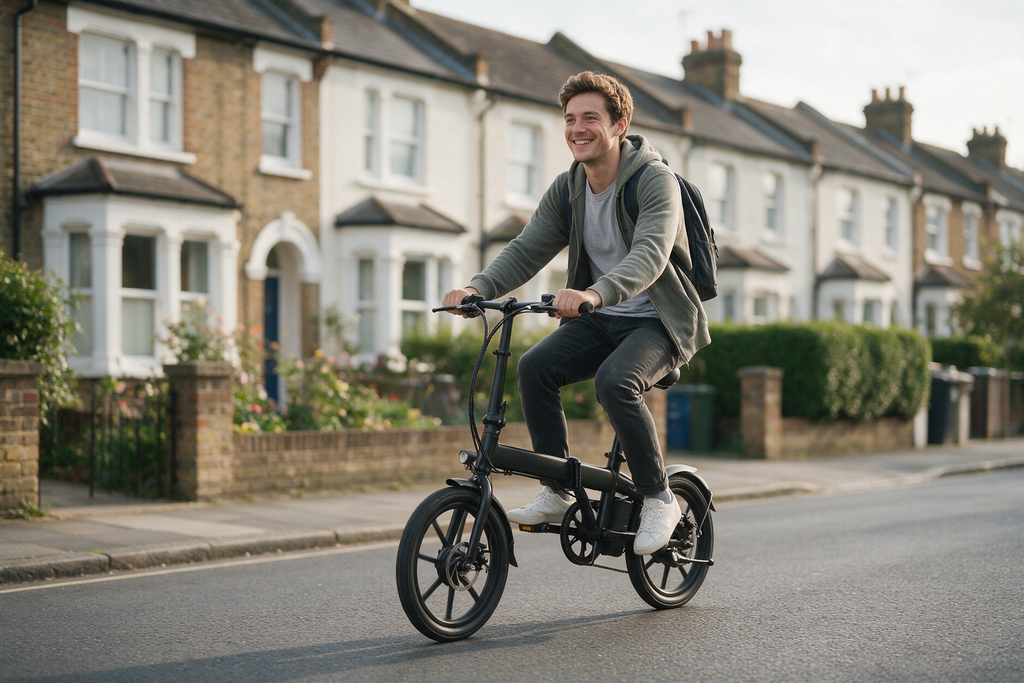
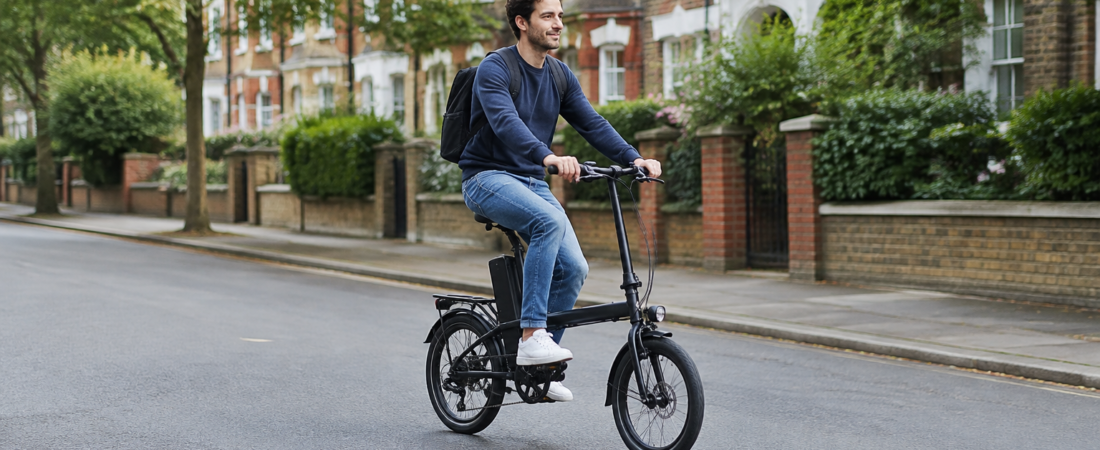
Decathlon electric bike
is the budget-first option in this comparison, and the question that usually follows a cheap e-bike — who fixes it when something breaks — has a more straightforward answer here than with any online-only brand: Decathlon’s UK stores service what they sell, so a common source of buyer hesitation is already resolved before the purchase. Buying Essentials. covers what that lower price trades away, and it shows up first in motor power, battery capacity and overall finish rather than in the fold itself, which is still perfectly usable day to day. For a short, mostly flat commute where the bike needs to fold, get to work and get serviced without hassle if something goes wrong, that trade-off is a reasonable one to make. If the commute is longer, hillier, or needs real range, the savings here come back to bite in the one place battery-limited budget e-bikes always show it. Current models and UK pricing are on Decathlon
What you actually get
Decathlon builds to a straightforward brief: keep the price down without cutting the basics that make an e-bike usable day to day. The fold is simple and reliable rather than engineered for the smallest possible footprint, the motor is modest rather than powerful, and the finish is plain rather than premium — none of which stops it from doing the job on a short, flat commute.
Decathlon does publish clearer, more consistent specs across its electric folding range than Dahon does, since the lineup is narrower and more standardised — but the numbers still sit below Brompton, Tern and most Dahon models on motor power and battery capacity, which is exactly what the lower price reflects. Current models are on Decathlon
Who it actually suits
This is the bike for someone who wants an electric folding bike without paying a premium for capability they won’t use — a short, mostly flat commute, occasional folding rather than daily train-and-lift use, and a preference for buying and servicing locally rather than researching a specialist brand. Buying Essentials covers exactly what the lower price trades away, so the compromise is a deliberate choice rather than a surprise.
It suits that buyer far more than someone commuting a longer or hillier route, where the more modest motor and battery show their limits fastest. For that rider, the extra spend on Tern or Brompton buys real capability rather than just brand name — a comparison Best Uses can help work through.
Pros
The lowest price of any bike in this comparison, backed by Decathlon’s UK store network for servicing and returns — a real advantage over online-only brands when something needs a repair. Straightforward enough that it doesn’t demand research into model variants the way Dahon does.
Cons
The more modest motor and battery show up fastest on longer or hillier commutes, and the finish and materials are noticeably plainer than Brompton or Tern. It’s also the least distinctive fold of the four, closer to a standard folding bike with a motor added than a folder engineered around the fold itself.
Range, in practice
The lower battery capacity here means the gap between the advertised figure and a real commute matters more than it does for the other three bikes — a hillier or heavier-rider route can eat into the already-modest range faster. Range And Battery covers how to check whether Decathlon’s actual capacity, not the headline number, covers your specific route before you buy.
Verdict
For a short, flat, low-drama commute where the priority is price and easy servicing over capability, the Decathlon earns its place as the budget pick in this comparison. If the commute is longer, hillier, or genuinely needs the smallest fold, the other three bikes in this comparison are worth the extra spend.